



Depression therapy options in Sacramento include cognitive-behavioral therapy, interpersonal therapy, and psychodynamic approaches, each tailored to individual needs. Kathleen Oravec, LMFT, offers evidence-based psychotherapy at 2118 P Street, focusing on long-term coping skills and emotional healing. Depression Therapy Options Sacramento addresses underlying causes, not just symptoms, for lasting relief.
Key Takeaways
Cognitive behavioral therapy restructures negative thought cycles that fuel depression.
Interpersonal therapy focuses on relationship conflicts and social isolation as depression triggers.
Psychodynamic therapy explores unconscious conflicts rooted in early experiences.
Psychotherapy builds long-term coping skills that outlast the treatment period itself.
What is depression and when should you seek therapy?
Depression is a medical condition affecting over 330 million people worldwide, according to the World Health Organization. The condition does not present the same way for everyone. Professional care treats depression effectively with compassion and the right combination of approaches. Sacramento residents experiencing persistent sadness, anxiety, or mood changes often reach out for support. A person does not need to be in crisis to seek help. Anyone can benefit from mental health counseling.
How do Sacramento therapists define clinical depression?
Clinical depression extends beyond temporary sadness or grief. The condition disrupts daily functioning, relationships, and physical health. Depression Therapy Options Sacramento range from short-term counseling focused on specific life challenges to deeper psychotherapy exploring long-standing emotional patterns. Both approaches aim to help clients feel better and live healthier, more fulfilling lives.
What signs indicate it is time to contact a Sacramento therapist?
Several warning signs signal the need for professional support:
Persistent low mood lasting most of the day for two weeks or longer
Loss of interest in activities once enjoyed
Significant changes in sleep or appetite
Difficulty concentrating or making decisions
Feelings of worthlessness or excessive guilt
Sacramento adults who recognize these patterns benefit from early intervention. Delaying treatment allows symptoms to deepen and disrupt work performance, family relationships, and physical health. Sacramento depression therapy addresses these symptoms through structured, evidence-based approaches tailored to each client’s needs. The World Health Organization’s figure of 330 million affected individuals underscores how common this condition is. No one needs to face it alone.
Which therapy modalities work best for depression?
Several psychotherapy approaches deliver measurable relief from depressive symptoms. Depression therapy options Sacramento providers offer target distinct aspects of the condition, from thought patterns to relationship dynamics. No single modality works for every individual. The right fit depends on symptom profile, personal history, and treatment goals.
What is cognitive behavioral therapy for depression?
Cognitive behavioral therapy (CBT) identifies and restructures negative thought cycles that fuel depression. A trained therapist guides clients to recognize distorted beliefs and replace them with balanced, realistic perspectives. This structured approach equips individuals with practical coping skills that extend well beyond the therapy room.
How does interpersonal therapy address depression?
Interpersonal therapy (IPT) focuses on relationship conflicts, life transitions, and social isolation as depression triggers. Clients examine communication patterns and unresolved grief that may sustain low mood. Strengthening these interpersonal skills often reduces symptoms and prevents recurrence.
Psychotherapy, often called talk therapy, involves working with a trained therapist to explore feelings, thoughts, and behaviors. Sessions help patients understand the root causes of their depression and develop lasting coping strategies. Specialized modalities tailor interventions to each form of depression, assisting Sacramento residents in addressing underlying causes directly.
A comparison of psychotherapy and medication reveals distinct pathways to recovery. Medication may restore chemical balance. Therapy builds durable skills.
Modality | Primary Focus | Key Benefit |
|---|---|---|
CBT | Thought patterns | Practical coping tools |
IPT | Relationships | Improved social functioning |
Psychodynamic | Unconscious conflicts | Deep emotional insight |
Psychodynamic therapy explores unconscious conflicts rooted in early experiences. This longer-term approach suits individuals seeking profound self-understanding rather than symptom management alone. Behavioral activation, another evidence-based option, counters the inertia of depression by scheduling rewarding activities. Each modality offers specialized strategies that assist patients in breaking free from depressive cycles.
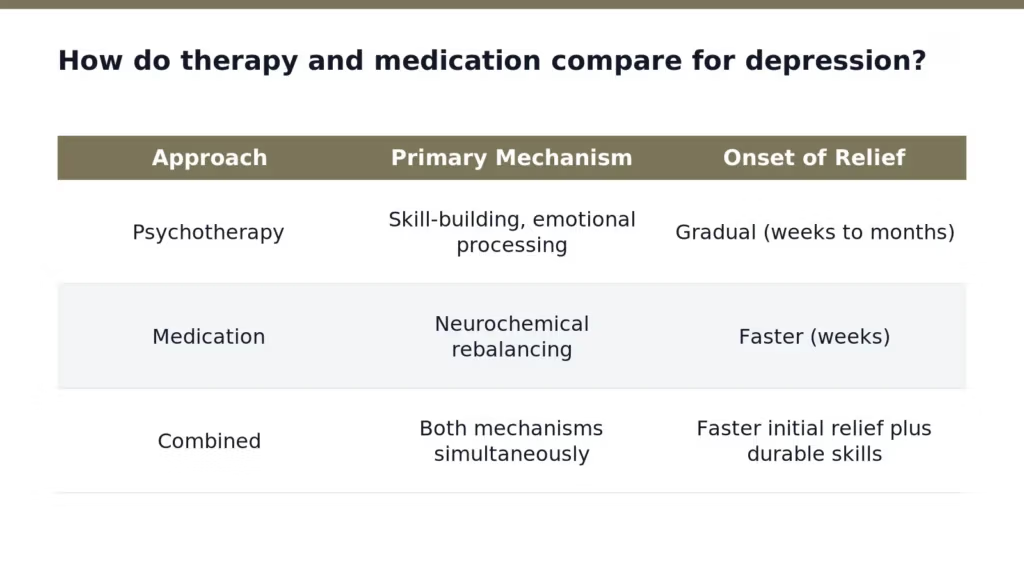
How do therapy and medication compare for depression?
Psychotherapy and medication represent two distinct, evidence-based Depression Therapy Options Sacramento residents evaluate when seeking relief. Medication often restores chemical balance in the brain and provides quicker symptom reduction. The right choice depends on depression severity, individual preferences, and professional guidance. Many Sacramento clients combine both approaches for comprehensive care.
Which works faster for depression symptoms?
Medication typically delivers faster initial relief. Antidepressants target neurotransmitter function directly, and many individuals notice improvement within weeks. This speed matters when daily functioning has collapsed.
Therapy moves at a different pace. Progress unfolds over months as clients identify thought patterns and behavioral triggers. The gains, however, tend to stick. Psychotherapy provides tools to manage symptoms even after sessions end, creating durable resilience against future episodes.
Does therapy address root causes that medication cannot?
Therapy explores the underlying emotional patterns driving depression. Counseling generally focuses on specific life challenges or short-term concerns. Psychotherapy may investigate deeper, long-standing patterns formed over years.
Medication addresses neurochemistry. It does not resolve relationship conflicts, grief, or ingrained negative self-beliefs. A Sacramento therapist helps clients untangle these contributors while medication stabilizes mood enough for that work to begin.
Approach | Primary Mechanism | Onset of Relief | Long-Term Benefit |
|---|---|---|---|
Psychotherapy | Skill-building, emotional processing | Gradual (weeks to months) | Tools persist after treatment ends |
Medication | Neurochemical rebalancing | Faster (weeks) | Symptom suppression during use |
Combined | Both mechanisms simultaneously | Faster initial relief plus durable skills | Highest overall efficacy |
The decision between therapy, medication, or a combination of both depends on depression severity, individual preferences, and guidance from qualified mental health professionals. No single path fits every person. Sacramento clients benefit from an honest assessment of what each option delivers and what it leaves unaddressed.
Where can Sacramento residents find depression therapy?
Sacramento residents access depression therapy through private practices, community mental health centers, and specialized counseling services across the city. The World Health Organization reports that more than 330 million people worldwide experience some form of depression, making local treatment resources essential for community wellbeing.
Midtown Sacramento Therapy provides compassionate, evidence-based counseling services led by Licensed Marriage and Family Therapist Kathleen Oravec. The practice specializes in individual therapy, trauma recovery, and codependency treatment. Each of these modalities addresses core components of depression therapy options Sacramento residents need for lasting recovery.
What types of depression therapy are available in Sacramento?
Sacramento therapists offer multiple evidence-based approaches tailored to individual needs. Individual therapy explores thought patterns and behaviors contributing to depressive symptoms. Trauma recovery addresses underlying experiences that often fuel chronic depression. Codependency treatment helps clients rebuild healthy relationship boundaries, a critical factor when depression intertwines with interpersonal dynamics.
Bridges of the Mind Psychological Services delivers comprehensive Sacramento depression counseling designed for individuals and families. Their neurodiverse-affirmative approach ensures treatment respects each client’s unique cognitive and emotional profile.
How do Sacramento residents choose the right depression therapist?
Selecting a therapist involves evaluating credentials, specialization, and therapeutic approach. Licensed Marriage and Family Therapists bring specific training in relational dynamics that influence mood disorders. Clients benefit from verifying a provider’s experience with their particular depression presentation.
Sacramento Therapist offers services including marriage and couples counseling, recognizing that relationship distress often accompanies depressive symptoms. The practice maintains a convenient Sacramento location. For those beginning their search, a guide on how to find a qualified counselor in the area provides practical steps for credential verification and therapy type selection.
Depression therapy works. Professional treatment helps clients develop coping skills, process difficult emotions, and restore daily functioning. Sacramento’s diverse therapeutic landscape ensures residents find care matching their specific needs and circumstances.
FAQ
What types of depression therapy are available in Sacramento?
Cognitive behavioral therapy, interpersonal therapy, and psychodynamic approaches are available, each tailored to individual needs.
How does cognitive behavioral therapy help with depression?
Cognitive behavioral therapy identifies and restructures negative thought cycles that fuel depression, replacing distorted beliefs with balanced perspectives.
How does interpersonal therapy differ from cognitive behavioral therapy?
Interpersonal therapy focuses on relationship conflicts, life transitions, and social isolation as triggers for depression, while cognitive behavioral therapy targets the negative thought patterns themselves. Many Sacramento therapists draw on both approaches depending on a client’s symptom profile.
Should Sacramento residents choose therapy, medication, or both for depression?
The right choice depends on depression severity, personal preference, and guidance from a qualified mental health professional. Medication often brings faster symptom relief, while therapy builds coping skills that last beyond treatment, which is why many Sacramento clients combine both for the most complete care.
Conclusion
Depression therapy options in Sacramento offer a clear path forward, whether through cognitive behavioral therapy, interpersonal therapy, or psychodynamic approaches. Choosing the right therapist and modality depends on your specific symptoms and goals. Professional treatment builds lasting coping skills and restores daily functioning. Take the next step by scheduling a consultation with a qualified provider who matches your needs.